- UST plans to use its newly acquired Italian design house to build automotive design capability in Malaysia
- Country head Amar Chhajer sees a fit with Penang’s chip engineering, with the first Italdesign visit expected in November
UST wants automotive design work done in Malaysia rather than only vehicle assembly. The US technology company is counting on Italdesign, the Italian design studio it took majority control of in September, to make that case to carmakers in the region.
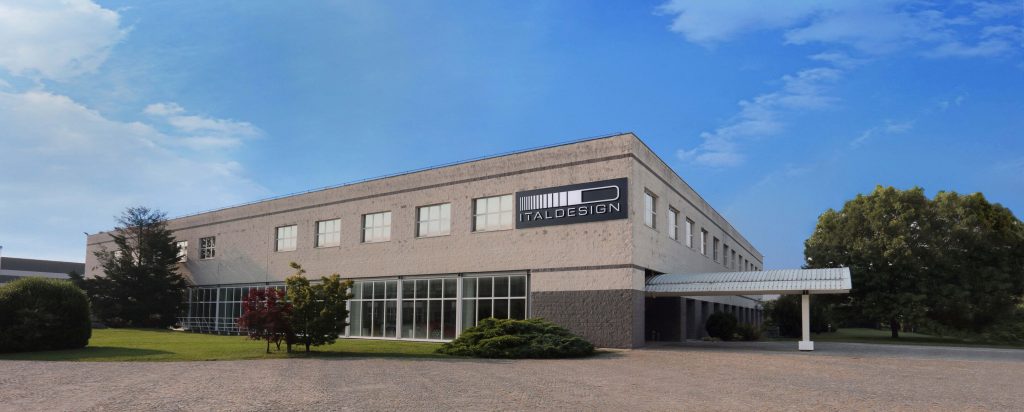
UST completed its acquisition of a majority stake in Italdesign from the Audi Group on 7 September, closing a deal signed in December 2025. Financial terms were not disclosed. Automobili Lamborghini, part of the Audi Group, retains what the companies call a significant stake, and Audi continues as a client and strategic partner rather than as Italdesign’s majority owner. Italdesign, founded in 1968 by Giorgetto Giugiaro and based in Moncalieri near Turin, employs more than 1,300 people across ten sites and has worked on more than 300 production vehicles.
UST employs around 1,600 people in Malaysia, part of roughly 2,000 across Southeast Asia, according to Amar Chhajer, UST’s country head for Malaysia. The company says it has more than 30,000 employees in more than 30 countries. UST has been in Penang since 2011, opened a technology centre in Bayan Lepas in 2017 and set up its first Southeast Asian Infinity Lab there in 2020. It runs offices in Penang and Cyberjaya, and Singapore is its regional base.
From assembly lines to automotive design
Global carmakers assemble vehicles in Malaysia while the design work happens in Europe and the United States, Chhajer told Tech Wire Asia in an exclusive interview on 30 September.
“Malaysia is mostly known for manufacturing. Even Toyota or BMW or Volvo, whatever we are getting locally, they are mostly getting assembled here, or the lines are just put up and assembled. They are not really designing the cars in Malaysia.”
The approach UST is proposing follows what Chhajer said the company did when it arrived in Malaysia around 15 years ago. Design and engineering work for its clients was being done in India, China and the United States at the time, and UST’s pitch was to build the same capability locally.
“We came in, and we said, we are the guys who are doing this for our customers in the US and India. Let’s build that pool for you here,” he added.

Chhajer said he wants to apply that to vehicles now that UST owns a design house. “Now we have such a strong design backbone in Italy, which is one of the world’s best design teams. We would like to bring that capability and offering to our customers here in the region.”
On local automakers, he said the constraint is capability rather than appetite.
“It’s not that they don’t want to design. What happens is they are so popularly known for manufacturing and assembly that they only get that kind of work. Design always happens in Europe; design happens in the US. So we would like to bring that capability into the country.”
His case for why this matters to Malaysia rests on pay. Design and research roles command considerably more than assembly work, he said, because the factory floor is already heavily automated.
“Manufacturing jobs are low-paying because manufacturing is highly automated. Design and R&D need a lot of creativity, judgment and innovation, and that is why they are high-paying jobs,” Chhajer said.
What UST had planned at the time of the interview was a meeting rather than a project.. Chhajer said the company intends to bring the Italdesign team to Malaysia and convene leading automakers for a workshop to establish where the two sides fit. UST chief executive Krishna Sudheendra and chief operating officer Gilroy Mathew had both been in Italy two weeks before the interview, he said.
Asked how far that had moved, he said the travel was planned, but the work had not started. “Not yet. I think it is still a bit early, but that is the plan.” Asked again in mid-October, UST said through its communications agency that there was no timeline for the visit. It said after publication that the first Italdesign visit is now expected in November, with further activity expected around the end of the fourth quarter and the start of next year, and that participating organisations and programme details are still being worked out
Italdesign is not expected to open its own office in the region. Chhajer said the Italian company would work through UST’s existing footprint instead.
“I expect UST Malaysia would start learning and borrowing a few people, experiences, collaborations and the network of Italdesign, and bringing that excellence here, rather than Italdesign setting up a new entity.”
Where Penang’s chip engineering fits
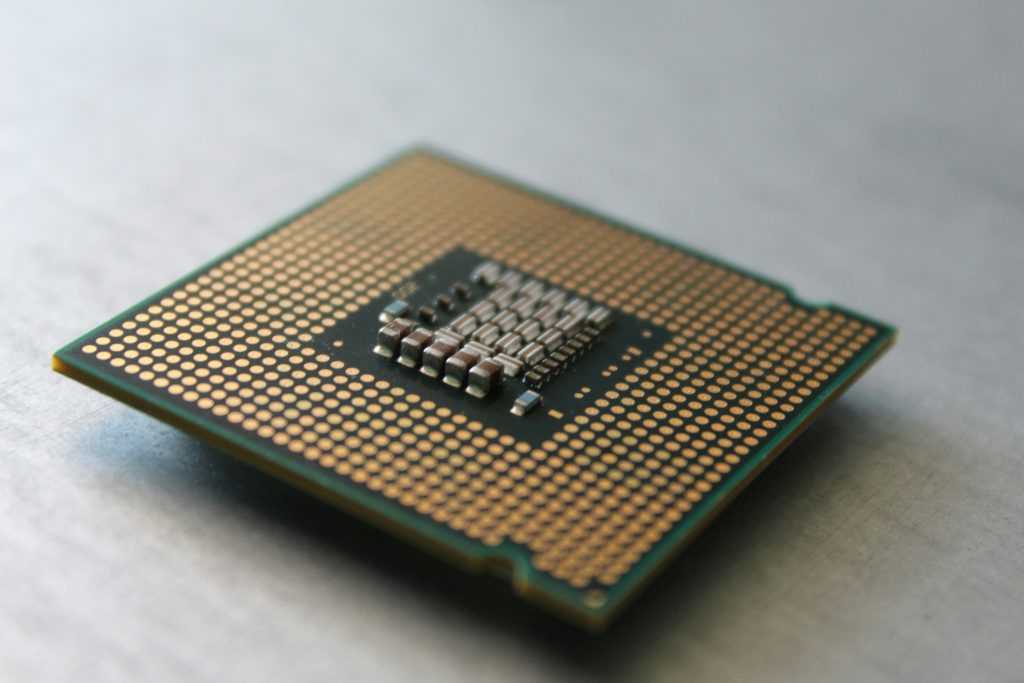
UST’s Malaysian operation is built around semiconductors. Chhajer said the work covers chip design, test, embedded programming and system integration, and that UST does package design rather than package manufacturing, and chip design rather than fabrication. The company said its Malaysian capabilities are spread across both pre-silicon and post-silicon engineering, covering design, verification, validation and package design, and that its turnkey package design work out of Malaysia is sought by global customers for advanced packaging requirements.
UST also said after publication that it already supports automotive customers from Malaysia through engineering R&D for chipsets and digital transformation work for vehicle manufacturers, and that Malaysia is within scope for its software-defined vehicle work, though it did not say what is delivered from the country.
Asked whether UST plans to connect that bench to Italdesign’s relationships with carmakers, in automotive chips or in embedded systems for software-defined vehicles, Chhajer agreed it was a direction worth pursuing but did not describe a programme behind it. He pointed instead to the gap between the two skill sets.
“Italdesign is mechanical design. They are not electronic design, and Malaysia does a lot of electronic design and chip design and manufacturing. So there is a great combination,” he said. On whether the acquisition could move Malaysian engineers from back-end test work into foundational integrated circuit design for automotive compute platforms, he said there was “possibility”, without setting out how or when.
UST built that capability by acquisition. In a June interview, Mathew told Business Today that the company entered semiconductors in 2009 and bought SeviTech Systems in 2018 to strengthen its pre-silicon design work, and that by 2023-24 it was supporting 35 semiconductor companies across the silicon lifecycle. His argument in that interview was that firms in the sector are strong in specific functions but need to “take ownership of larger engineering programmes”, and that “semiconductor leadership is not built overnight”.
Where UST is actually committing
India has had the firmer commitment so far. UST and Kaynes Semicon announced a joint venture in September 2025 for an assembly and test plant at Sanand in Gujarat, with investment reported at Rs 3,330 crore. UST’s own share was not disclosed. By comparison, UST’s Malaysian plan amounts to a first Italdesign visit in November.
Chinese manufacturers, which are expanding fastest into Southeast Asia, built vertically integrated supply chains while European, Japanese and American rivals outsourced theirs over decades. Research by the Rhodium Group, reported by CNBC in March, attributes much of the cost advantage Chinese carmakers now hold to that integration. It also narrows the opening for firms like UST, because more of the design, electronics and software work stays inside the carmaker.
UST described Proton and Perodua as important customers of interest it would like to explore Italdesign’s capabilities with. On the Chinese carmakers expanding into Southeast Asia, the company said it does not comment on individual prospects, active pursuits or confidential commercial discussions.
What slows the region down
UST plans to add at least 25 to 30% to its regional capacity each year, Chhajer said, and the Malaysian team is held up as an example to prospective investors who arrive believing the talent is not there. He sits on the advisory panel for Penang Silicon Design @5km+, the state initiative to build an integrated circuit design ecosystem, alongside representatives from Intel Malaysia Design Centre, SkyeChip and Oppstar.
Client readiness is the nearer obstacle. Chhajer said AI programmes routinely turn into data projects before they deliver anything, because enterprise data sits in different formats and different systems. UST’s own Thinking Ahead 2026 survey of 510 senior enterprise leaders found 86% felt fully prepared to extend AI enterprise-wide, while 44% named data quality as their single biggest implementation barrier.
The real brake on regional growth, in Chhajer’s account, is where decisions get made. Companies with leadership in the region can commit to large programmes, he said, while subsidiaries of global firms generally cannot.
“Unless we are working with Petronas, or with a CIMB or a Maybank whose CEOs are sitting here, they can make a decision for the region. But if you are working with a global organisation whose bosses are in Germany or the US or Australia, then they would likely make the bigger decisions in the headquarters.”
What he wants is more authority held in the region. “We would like to have more decision-making happen in Southeast Asia,” he said.
Updated 21 October 2026: UST provided answers to written questions after this article was published. The passages on its automotive work in Malaysia and on the timing of the Italdesign visit have been updated.

Want to learn more about AI and big data from industry leaders? Check out AI & Big Data Expo taking place in Amsterdam, California, and London. The comprehensive event is part of TechEx and is co-located with other leading technology events, click here for more information.
Tech Wire Asia is powered by TechForge Media. Explore other upcoming enterprise technology events and webinars here.