- China’s Apple Intelligence leaves out Siri AI and the features Apple showed at WWDC 2026
- Developers can test it from November 4, about two years after the US launch
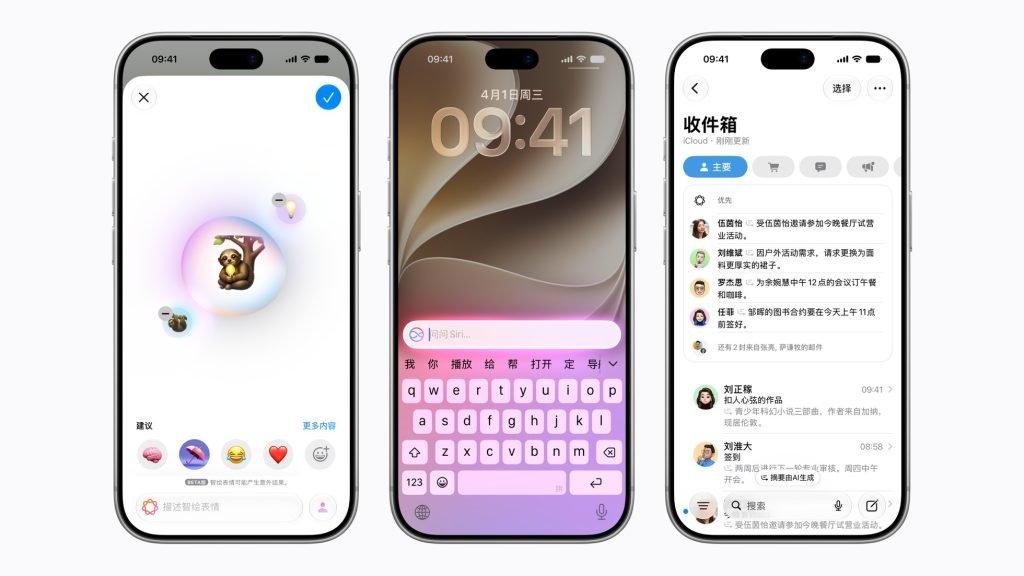
Apple Intelligence will reach iPhone users in mainland China in December, in a version that leans on Alibaba’s Qwen model and leaves out Siri AI and the other next-generation features Apple unveiled at WWDC 2026.
Apple said in a statement on its China newsroom on October 31 that the first batch of Apple Intelligence features will roll out with iOS 27.3 in December, and that developers can begin testing them from November 4. The launch comes about two years after Apple Intelligence first went live in the US on October 28, 2024.
What Apple Intelligence brings to China
The first wave includes live translation in Messages, FaceTime and the Phone app, Writing Tools for rewriting, proofreading and summarising text, Visual Intelligence through the iPhone camera, and the Clean Up tool for removing objects from photos. Mail and notification summaries, priority messages and call transcript summaries are also part of the release, according to Apple’s list.
Apple said Apple Intelligence runs on a generative model it built itself, and that it worked with Alibaba so that users in China can use Qwen directly in Siri, Writing Tools and Visual Intelligence, including for understanding text and images. Siri can pass certain requests to Qwen; users can ask questions about photos and documents, and Qwen can generate original content from scratch inside the system’s Writing Tools. Users sign in with a Qwen account or through Apple to use it.
Apple added that support for other platforms will follow once it obtains the necessary approval, without naming them. Some reports have said Baidu will handle search and visual recognition, but Apple’s statement does not mention Baidu.
What China will not get
The December update does not include Siri AI or the other next-generation Apple Intelligence features Apple announced at WWDC 2026, the company said. Bloomberg, which reported the December timing earlier in October, said Apple’s Image Playground tool would also be left out.
The features are available only on supported iPhones bought in China, or on devices whose location and Apple Account region are both set to China, CGTN reported. Separately, according to China Daily, Alibaba said user requests and the responses Qwen generates will not be used to train its models.
Two years to clear Beijing
Chinese rules require foreign companies to work with domestic partners to offer AI services, and any generative AI service offered to the public must go through an approval process run by the Cyberspace Administration of China (CAC). Apple also considered Tencent and ByteDance before choosing Alibaba, the Financial Times reported. Alibaba chairman Joe Tsai confirmed the partnership at the World Governments Summit in Dubai in February 2025.
In June 2025, the Financial Times reported that the companies’ joint AI applications had stalled at the CAC amid US-China trade tensions, with final sign-off resting with China’s State Council. The CAC said on July 15 that it had completed filings for seven more on-device generative AI services, including Apple Intelligence alongside Samsung’s Galaxy AI and Huawei’s Xiaoyi, China Daily reported.
What is at stake
China is Apple’s second-largest market, where domestic rivals such as Huawei and Xiaomi have already rolled out their own AI features. Apple ranked second in China’s smartphone market in the third quarter of 2026 with a 19.5% share of shipments, behind Huawei’s 21.3%, according to Counterpoint Research. Overall shipments fell 10% year on year to their lowest third-quarter level in 14 years.
For Alibaba, the deal puts Qwen inside one of the world’s largest smartphone ecosystems. Alibaba chief executive Eddie Wu said Qwen will integrate deeply into the Apple ecosystem to deliver new experiences for Apple users in China.
Apple has not given a specific date for the iOS 27.3 release in December.